

How Heavy Are Toilets? Complete Guide to Toilet Weight by Type, Material & Size
How heavy are toilets? It’s one of those questions that sounds simple but turns out to matter a great deal the moment you’re standing in a bathroom aisle, staring at a box that might weigh as much as a small person. Whether you’re planning a DIY installation, replacing an old unit, or moving into a new home with second-floor bathrooms, knowing the average toilet weight upfront can save you a serious headache and a strained back.
The short answer: most toilets weigh between 60 and 120 pounds (27–55 kg) when dry. But the full picture is more nuanced, and understanding it will help you make a smarter buying and installation decision.
Why Toilet Weight Actually Matters


Most people don’t think about toilet weight until they’re already mid-renovation. But toilet weight affects nearly every stage of the product’s life, from purchase to installation to long-term use.
Here’s why it matters:
- Installation complexity: Heavier toilets often require two people or professional help. A one-piece toilet weighing 100+ pounds is significantly harder to maneuver through a narrow hallway than a lighter two-piece model.
- Floor load bearing: Homes with older flooring or second-floor bathrooms need to account for both the toilet’s weight and the added weight of water in the tank.
- Shipping costs: A toilet’s shipping weight can be 10–25% higher than its net weight due to packaging, foam, and pallets, something to budget for when ordering online.
- Disposal and replacement: Removing an old ceramic toilet takes real effort, especially without a hand trolley or assistant.
- Wall-mounted safety: For wall-hung toilets, weight distribution is a structural concern. These must be mounted correctly into the all framing.
“Carrying, lifting, and moving toilets can cause back pains and spinal problems if proper care is not taken. I highly recommend using a wheelbarrow or hand trolley.” Solid Toilet Research Guide
Average Toilet Weight by Type
The toilet type is the single biggest factor determining how much a toilet weighs. Below is a clear breakdown of all major toilet styles.
Toilet Weight Comparison Table
| Toilet Type | Average Weight (lbs) | Average Weight (kg) | Notes |
| Two-Piece Toilet | 60–100 lbs | 27–45 kg | Most common in homes; the tank and bowl are separate |
| One-Piece Toilet | 70–120 lbs | 32–54 kg | Heavier, sleeker; molded as a single unit |
| Wall-Mounted Toilet | 50–70 lbs | 22–32 kg | No integrated tank; lightest style |
| Smart Toilet | 90–120+ lbs | 41–55+ kg | Electronics and bidet functions add weight |
| Compact Toilet | 50–70 lbs | 22–32 kg | Designed for small bathrooms |
| Elongated Toilet | ~100 lbs | ~45 kg | Larger seating area, bigger tank |
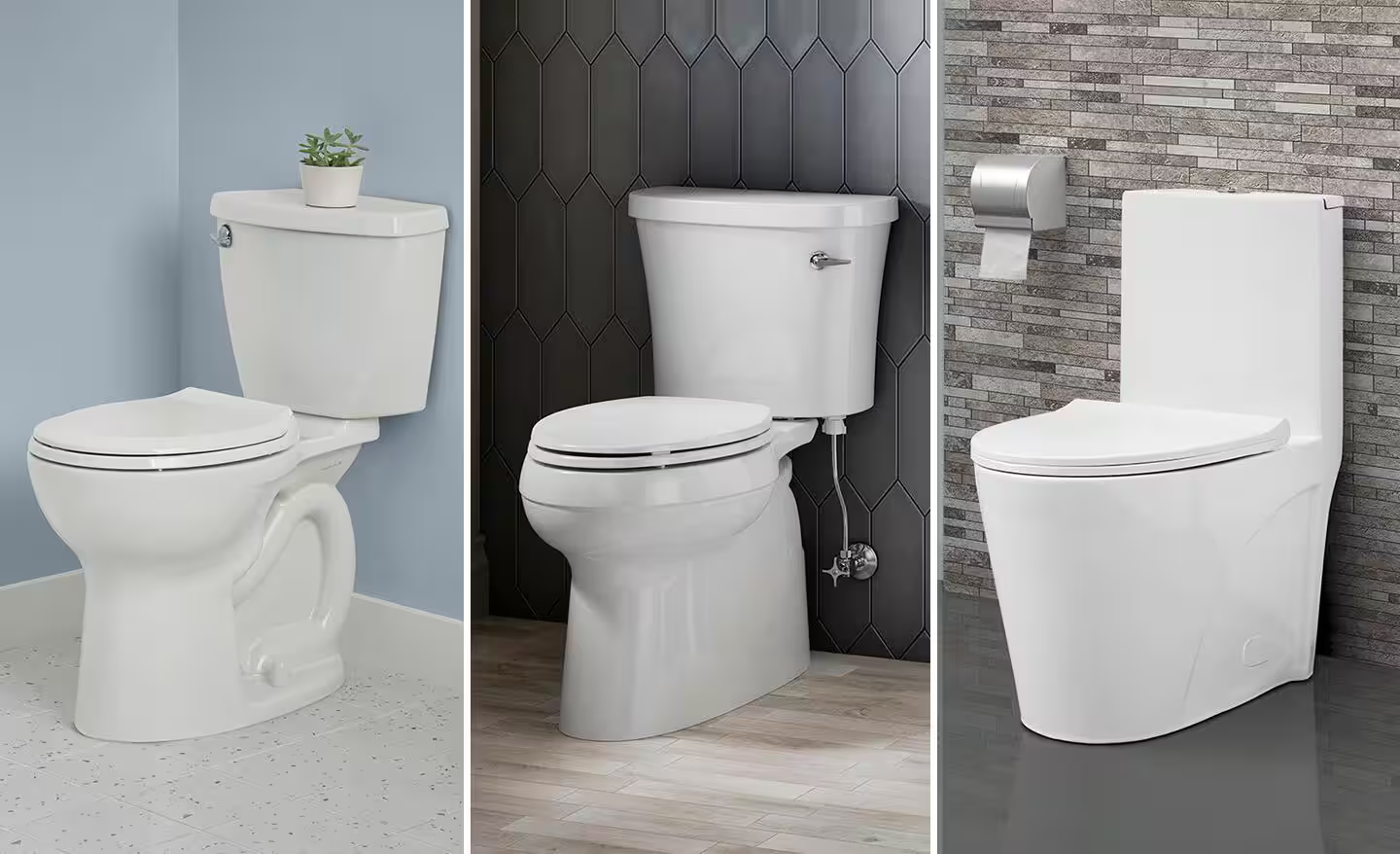
Two-Piece Toilets
Two-piece toilets are the most common style found in American homes, and for good reason. The separate tank and bowl can be carried individually, making them far more manageable for a DIY installation. Standard two-piece models weigh 60–100 pounds (30–45 kg) in total.
The key advantage is portability; you can carry the toilet bowl (roughly 50 pounds) and toilet tank separately, reducing the effort of each lift. The tank lid alone weighs about 10 pounds and can be removed first to simplify handling.
Popular two-piece models and their weights:
- American Standard H20: 70 lbs
- TOTO Vespin II: 106 lbs
One-Piece Toilets
One-piece toilets are molded as a single unit with no seam between the tank and bowl. This makes them look more modern and easier to clean, but it also means you can’t separate them during a move. Their ceramic walls are typically 2–3 mm thicker than those in two-piece models, which contributes to their higher weight range of 70–120 pounds (32–54 kg), with an average of around 88–90 pounds.
Popular one-piece models and their weights:
- American Standard Boulevard Flowise: 117 lbs
- KOHLER San Souci: 92–94 lbs
- TOTO Ultramax II: 99 lbs
Despite the extra weight, one-piece toilets are sturdier, less prone to leaks, and have a clean aesthetic that many homeowners prefer.
Wall-Mounted Toilets
Wall-hung toilets are the lightest of all toilet types, typically weighing 50–70 pounds because they consist of only a bowl with no integrated tank. The tank is either hidden inside the wall or fed by a direct water supply line.
These are common in commercial buildings and modern European bathrooms. While the toilet unit itself is lighter, installation is more complex because the in-wall carrier system must be anchored properly to support both the toilet and its user. The ASME standard requires wall-hung toilets to support at least 500 pounds.
Smart Toilets
Smart toilets, those equipped with heated seats, bidet functions, automatic lids, and sensors, tend to sit at the heavier end of the spectrum, often weighing 90–120+ pounds. The electronic components and extra features add significant bulk, and installation is more involved.
How Toilet Material Affects Weight

Not all toilets are made the same way, and toilet material is a major factor in how much a unit weighs.
Material Weight Comparison
| Material | Density | Relative Weight | Common Use |
| Vitreous China | >2.5 g/cm³ | Heaviest | Standard household toilets |
| Standard Ceramic | ~2.3 g/cm³ | Moderate | Budget models |
| Porcelain | Similar to vitreous china | Heavy | Most U.S. toilets |
| Acrylic/Plastic | ~1.18 g/cm³ | Lightest | Portable/temporary setups |
| Steel/Metal | Varies | Moderate | Commercial/industrial |
Vitreous china, the material used in most quality household toilets, is fired at higher temperatures than standard ceramic. This makes it denser, harder, and typically 20–30 pounds heavier than standard ceramic of the same size. It’s also more resistant to staining and wear, which is why it dominates the residential market.
Porcelain (sometimes used interchangeably with vitreous china) is made primarily from kaolin clay, along with silica, quartz, and ball clay. These natural, dense materials are what give toilets their characteristic heft and durability.
Acrylic toilets, by contrast, have a density of only 1.18 g/cm³, about half the weight of ceramic. These are lighter but significantly less durable, making them suitable only for temporary or lightweight applications.
How Size and Shape Affect Toilet Weight
Size directly affects how much material a toilet uses and, therefore,e its weight.
- Compact toilets (14–16 inches): Designed for small bathrooms; weigh approximately 50–70 pounds
- Standard elongated toilets (~18 inches): Provide a larger seating area and bigger tank capacity; typically weigh around 100 pounds
- Comfort height toilets: These are taller by up to 2 inches (standing at 17 inches versus the standard 15 inches), whicnoticeably increases weightly
Bowl shape also plays a role: curved bowls are generally slightly lighter than square ones, since square edges require extra material for structural stability.
Does Heavier Always Mean Better Quality?

This is one of the most common assumptions people make, and the answer is: partly, but not always.
There is a grain of truth to it. Heavier toilets often use denser, more wear-resistant materials, particularly vitreous china ve rsus standard ceramic. A well-fired, dense toilet bowl will produce a crisp, clear sound when tapped, indicating high-quality construction. One-piece models are generally sturdier than two-piece models simply because they’re molded as a single unit.
However, weight alone isn’t a foolproof indicator of quality. Some manufacturers simply make ceramic walls thicker to increase weight, without improving the firing process. If the ceramic contains hidden air pockets from poor manufacturing, the toilet could still crack easily despite being heavy. Similarly, a feature-heavy smart toilet might weigh a lot due to electronics, but if those components are cheaply assembled, that weight doesn’t translate to reliability.
How to actually assess toilet quality:
- Tap the bowl: A crisp, clear ring means dense, well-fired ceramic
- Feel the glaze: Smooth and flawless = higher craftsmanship
- Inspect the joints: Even spacing and clean edges indicate careful manufacturing
- Check the brand: TOTO, KOHLER, and American Standard have proven track records
How Much Does a Toilet Weigh With Water?
When you see a toilet’s net weight listed in product specs, that figure is the dry weight without water, the seat, or the lid.
In real-world use, a toilet is heavier than its listed spec once installed:
- Toilet tank water: Adds approximately 15–25 pounds, depending on tank size
- Toilet seat: Adds a few pounds depending on material (plastic vs. hardwood)
- Tank lid: Adds ~10 pounds if not already included in the listed weight
So a two-piece toilet listed at 70 pounds might effectively weigh 90–95 pounds after full installation and filling. This real-world weight matters for floor load calculations, especially in older homes or second-floor bathrooms.
Toilet Weight and Floor Load Capacity
For most modern homes, standard toilet weight is not a structural concern. However, older homes, second-floor bathrooms, or floors with visible flex deserve a closer look before installing a heavier model.
Things to consider:
- A fully installed one-piece toilet filled with water can weigh close to 140 pounds
- Wall-mounted toilets require proper in-wall framing, and the ASME standard mandates a 500-pound capacity
- Floor toilet weight limits are not standardized by government regulation, but most quality porcelain models can support up to 1,000 pounds of vertical force (per Kohler’s own specifications)
- If you’re unsure, consult a licensed plumber or structural engineer before installation.
How Much Weight Can a Toilet Support?
This question often comes up for a different reason, not the toilet’s own weight, but how much weight a toilet can hold while in use.
- Standard floor-mounted toilets: Typically support 300–500+ pounds in everyday use; laboratory tests often apply 800–1,000 pounds to verify structural integrity
- Wall-hung toilets: ASME-rated to support at least 500 pounds
- Average toilet seat: Most standard seats are rated to around 300 pounds
Cracking is rarely caused by weight alone. Impact, rocking, improper installation, or manufacturing defects are far more common causes of toilet damage than the user’s weight. If you’re concerned, look for reinforced fixtures or heavy-duty bariatric toilet seats rated at 800 lbs capacity.
Popular Toilet Brand Weights: Real Numbers
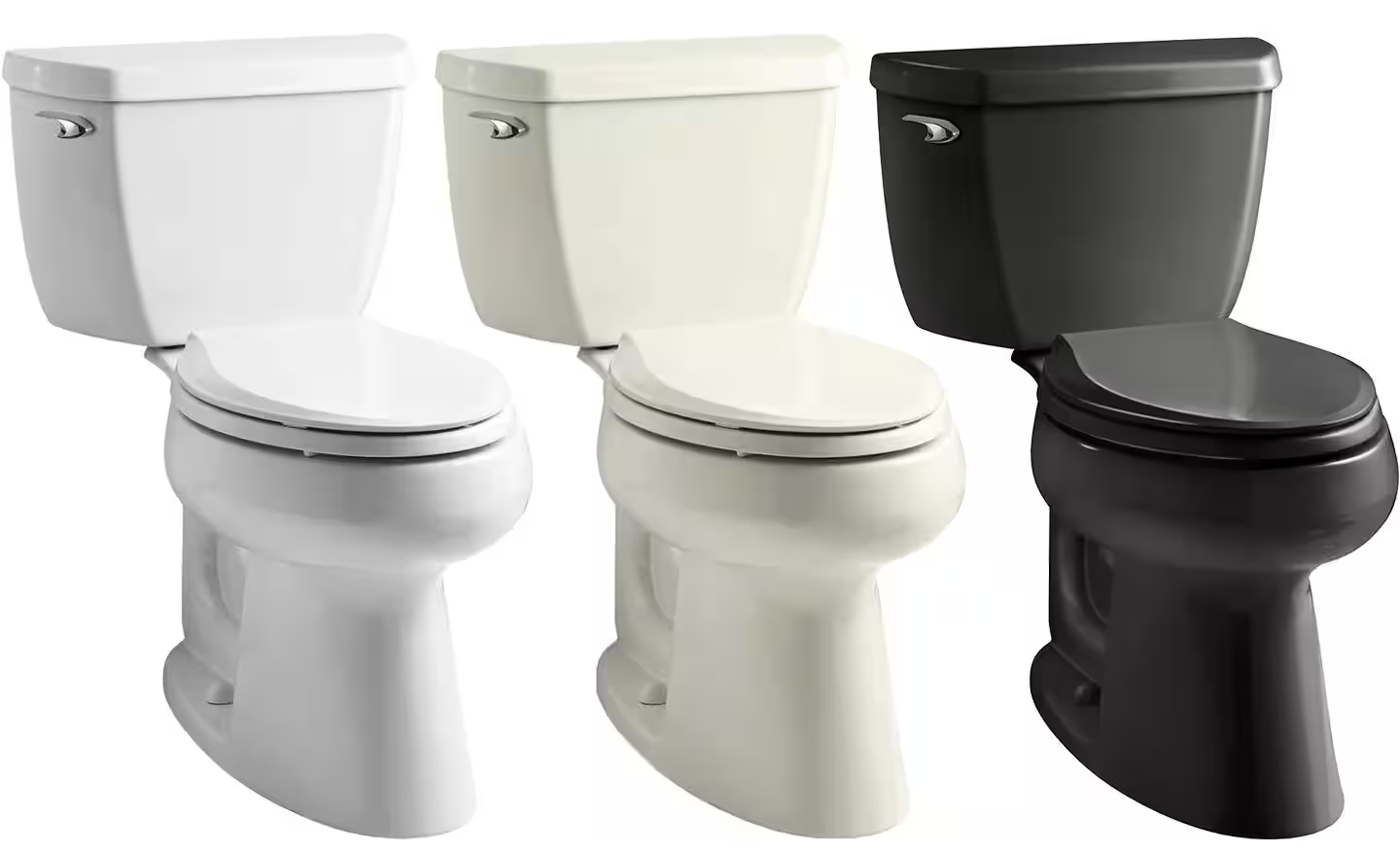
Here’s a quick reference for some of the most popular toilet models and their actual weights:
| Brand & Model | Type | Weight |
| American Standard Boulevard Flowise | One-piece | 117 lbs |
| TOTO Ultramax II | One-piece | 99 lbs |
| TOTO Vespin II | Two-piece | 106 lbs |
| KOHLER San Souci | One-piece | 92–94 lbs |
| American Standard H20 | Two-piece | 70 lbs |
These figures represent dry net weight without water, seat, or packaging.
Tips for Moving and Installing a Heavy Toilet
Whether you’re installing a new toilet or removing an old one, here are practical tips for handling the weight safely:
Before you start:
- Remove the tank lid and set it aside (10 lbs lighter immediately)
- For two-piece models, disconnect and remove the tank separately before lifting the bowl
- Drain all water from the tank and bowl before moving
During the move:
- Use a hand trolley or dolly. This is the single best thing you can do for your back
- If carrying by hand, have a second person help, especially for one-piece models
- Bend your knees, not your back
- Navigate narrow doorways carefully , he awkward shape of a toilet makes corners tricky
Professional help:
- One-piece toilets weighing 100+ pounds should ideally be installed by a professional plumber
- Wall-mounted toilets always require professional installation for structural safety
Frequently Asked Questions

Q: How heavy is a toilet on average?
The average toilet weighs 60–120 pounds (27–55 kg) dry, depending on type and design. Two-piece models average 60–100 lbs; one-piece models average 70–120 lbs.
Q: Can one person carry a toilet alone?
A two-piece toilet can generally be carried by one person in two trips (tank separately, then bowl). Most one-piece toilets are too heavy and awkward for one person; a second set of hands is strongly recommended.
Q: How much does a toilet weigh with water in the tank?
Add 15–25 pounds for water in the tank. A 70-pound toilet becomes approximately 85–95 pounds once installed and filled.
Q: Is a heavier toilet better?
Not necessarily. Weight can indicate denser, higher-quality materials, but craftsmanship, firing quality, and brand reputation are equally important. A well-made lighter toilet will outperform a poorly made heavy one.
Q: How much does a wall-mounted toilet weigh?
Wall-mounted toilets weigh approximately 50–70 pounds less than floor-mounted options because they have no integrated tank.
Final Takeaway

Understanding how heavy toilets are before you buy or install one is more important than most people realize. The weight impacts everything from whether you can DIY the installation to how your floors handle the load.
To summarize the key facts:
- Two-piece toilets: 60–100 lbs, easiest to move and install DIY
- One-piece toilets: 70–120 lbs heavier but more durable and modern-looking
- Wall-mounted toilets: 50–70 lbs , ightest but require professional installation
- Smart toilets: 90–120+ lbs heaviest due to electronics
- Add ~15–25 lbs for water once the toilet is installed
Vitreous china remains the gold standard material for durability, even though it adds weight. If you’re doing a DIY install, a two-piece toilet is your best friend. If you want a sleek, modern look and don’t mind paying a plumber, a one-piece model delivers the aesthetic and the heft that signal quality.
When in doubt, use a hand trolley, bring a friend, and always check the weight specs before ordering online.
If you want to read more about other topics, then go to the main page of hometechfacts.com.
